
The Short Answer: Hillside Deck Construction Costs 30–60% More. Here's Why.
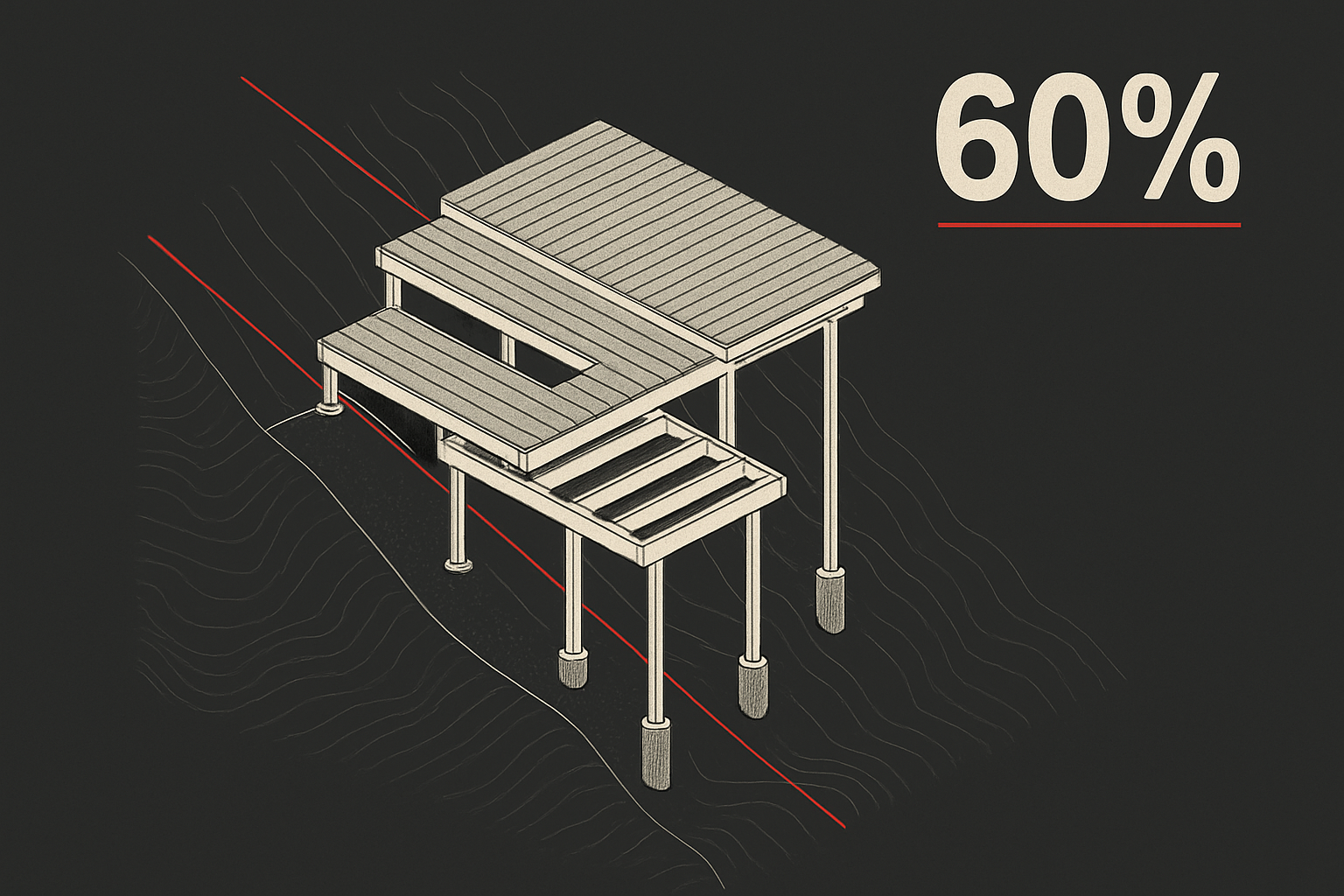
A flat-lot 400 sq ft composite deck in the Bay Area runs $22,000–$32,000. The same deck on a Bernal Heights or Twin Peaks hillside runs $32,000–$52,000 — and on a steep Marin canyon lot, it can reach $60,000–$75,000+. That 30–60% cost premium isn't contractor markup. It's engineering, access logistics, and structural requirements that simply don't exist on flat ground. If you're planning hillside composite deck construction in San Francisco or Marin, here's what's actually driving the cost, what to expect at each slope tier, and what every contractor should be able to tell you before you sign anything.
What Makes Hillside Deck Construction Different
A deck on a slope is not a flat-lot deck with taller posts. It's a different structural problem — one that requires different foundations, different post sizing, different drainage strategy, and an entirely different plan for getting materials to the site. Homeowners who price a hillside deck based on flat-lot comparisons consistently end up surprised at the gap. Understanding the four variables below explains almost all of it.
Foundation Engineering: Caissons vs. Surface Footings
On flat lots, a standard deck footing is a 24-inch diameter concrete pour into a hand-dug hole. That works when soil bearing capacity is predictable and the load path is simple. On a hillside, neither condition holds.
Hillside lots in Twin Peaks, Noe Valley, Bernal Heights, and across the Marin hillside towns — Mill Valley, Tiburon, Sausalito — typically require drilled pier footings or caissons. Caissons are machine-drilled holes extending down to bedrock or competent load-bearing soil, bypassing the unstable fill and decomposed rock that cover most Bay Area hillside lots. Pier depths of 10–20 feet are common. On the steepest lots in Marin, 25-foot caissons aren't unusual.
Drilled piers cost $800–$2,000 each installed. A hillside deck typically requires 6–12 of them. Surface footings — the poured-concrete shallow alternative — are not adequate for steep-slope applications. A contractor proposing surface footings on a lot with more than a 20-degree slope is underbuilding the foundation. Ask directly: caissons or surface footings? The answer tells you a lot about what you're being sold.
Post Heights and Structural Loads
On a flat lot, a deck 2 feet above grade needs 2-foot posts. On a hillside, the deck surface is level with the house while the ground drops away sharply — which means the downhill posts can be 12, 15, or 20 feet tall. At those heights, posts become structural columns with real lateral load concerns. They're not just holding the deck up. They're resisting the tendency to rack under wind loading and seismic forces.
Post heights above 8 feet require engineering beyond simple span tables. Above 12 feet, you're typically in moment-frame or knee-brace territory — additional structural hardware that doesn't appear on flat-lot bids and doesn't come cheap. A standard 4×4 post at 3 feet is a commodity item. A 6×6 or built-up post at 16 feet, carrying a calculated tributary load, is a structural design decision — not a field judgment call.
Drainage and Water Management
Steep sites concentrate and accelerate water. Rain that lands on a hillside deck has to go somewhere, and if the drainage isn't engineered correctly, "somewhere" becomes the soil around your caisson footings — undermining bearing capacity over time and creating the conditions for differential settlement. This is a common failure pattern on Bay Area hillside homes where deck drainage was treated as an afterthought.
Hillside deck scopes on Marin canyon lots and steep SF neighborhoods typically require site grading around footing locations, perforated drain pipe at the base of posts, and daylight outlets that carry water away from the foundation zone. On lots with existing erosion patterns, this can also require a civil engineer's input beyond the structural stamp. Budget $2,000–$5,000 for engineered drainage on steep sites. It's not optional.
Why Access for Equipment and Materials Is a Real Cost Driver
This is the item most homeowners don't think about until a contractor breaks out the extra charge. On a flat lot with alley access, a concrete truck backs up, a lumber delivery drops at the curb, and equipment parks where it needs to be. On a steep Twin Peaks lot with a staircase entrance, none of that is possible.
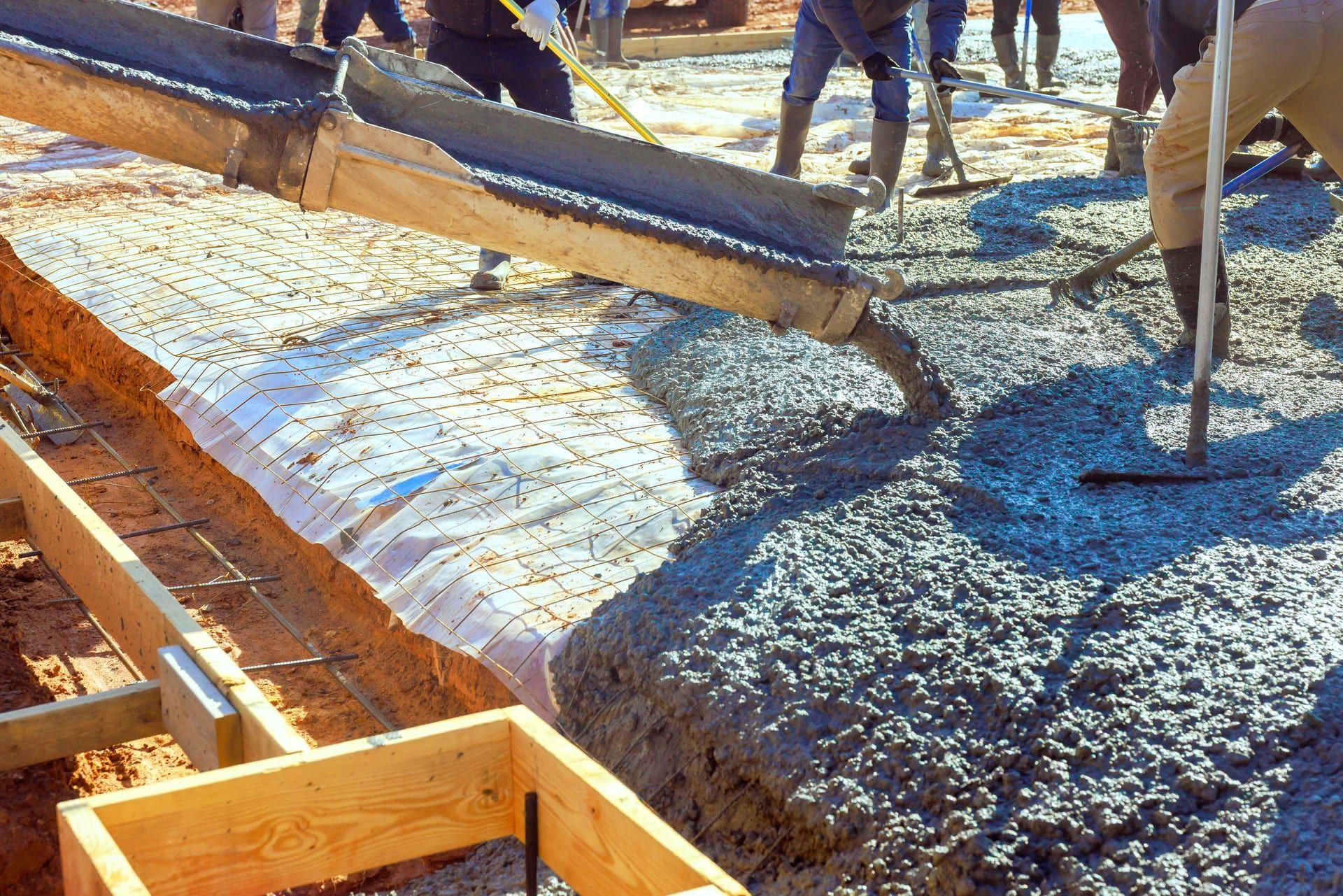
Concrete for caissons often has to be pumped or delivered in small loads by wheelbarrow from the nearest accessible point — adding time and labor cost. Lumber has to be hand-carried down stairs or through narrow side yards. On the steepest Marin hillside lots — certain properties in Sausalito, Tiburon, and Tamalpais Valley in Mill Valley — helicopter material delivery is not a hypothetical. It's a real line item, running $2,500–$6,000 for a half-day lift to get framing lumber and hardware to an otherwise inaccessible site.
Any contractor bidding a steep-slope multi-level deck without explicitly addressing material delivery is leaving a real cost somewhere — either in a vague access allowance or as a future change order after the project has started.
Why Does Hillside Deck Construction Require More Engineering?
Hillside decks in San Francisco and Marin are not permit-optional. The engineering and permitting requirements are specific, add real cost and schedule, and are not discretionary. Here's what every slope project triggers.
Structural Engineer Stamp (Required, Not Optional)
Any multi-level or elevated deck on a hillside slope in SF or Marin will require drawings stamped by a licensed structural engineer. The engineer determines pier depth and diameter, post sizing, connection hardware specifications, lateral bracing strategy, and load paths. The structural engineer stamp fee runs $2,000–$6,000 depending on project complexity — more on large multi-level scopes where the engineer has to design several framing levels independently.
The engineer's fee is not padding. It's the reason the deck doesn't move in a 6.0 magnitude earthquake or a sustained Marin windstorm. Any bid that doesn't carry an engineering line item on a hillside project is either burying it in overhead or planning to build without one. Both are red flags.
SF DBI and Marin CDA Permit Processes
SF DBI (the San Francisco Department of Building Inspection) is the city agency that issues residential permits for structural, mechanical, and exterior work — including all decks. In San Francisco, any deck over 30 inches above grade requires a permit. Hillside and elevated decks trigger full plan review — not just over-the-counter permits — which adds 2–4 months to the pre-construction schedule. Budget $2,500–$5,500 for the SF DBI permit on a hillside deck, depending on project valuation.
In unincorporated Marin and several incorporated cities, permits run through the Marin CDA (Marin Community Development Agency). Similar requirements apply: stamped structural drawings, plan review, and inspections at foundation, framing, and final. Marin CDA permit timelines are comparable to SF DBI — plan for 2–4 months of permit processing before construction begins. Both jurisdictions require permit inspection at caisson installation before concrete is poured. Don't skip that inspection. The concrete covers the evidence permanently. Load-carrying framing work above the foundation — a beam replacement or a load-bearing wall removal — follows a similar permit path.
Seismic Requirements for Elevated Deck Structures
Bay Area deck construction occurs in Seismic Design Category D — one of the highest seismic risk classifications in the country, per ASCE 7-22. Elevated hillside decks have additional lateral load requirements because tall posts create significant moment arms under lateral acceleration. Under California Residential Code Section R507 and the CBC, this typically means: positive-connection hardware at every post-to-beam and beam-to-joist joint (not toenails), moment frames or knee braces at post bays, and hold-down hardware at caisson tops. These requirements are enforced at permit inspection. They add $1,500–$4,000 in structural connectors on a complex hillside scope — but they're also what distinguishes a deck that's still standing in 2040 from one that isn't.
WUI Fire Zone Compliance: Material Requirements
WUI (wildland-urban interface) is California's designation for residential areas adjacent to wildland fire fuel, governed by California Building Code Section R327. WUI requirements apply to most of Marin, the Oakland Hills, the Berkeley Hills, and portions of Twin Peaks and Bernal Heights in San Francisco. In WUI zones, deck materials are not a free choice.
CBC Section R327 requires ignition-resistant construction: decking and structural members must meet Class A or Class B fire-resistance ratings, and the deck assembly must minimize ember accumulation. In practice, this means composite decking (Trex Transcend and TimberTech AZEK both qualify), non-combustible steel framing in some high-hazard zones, and ember-resistant screening under deck boards. Standard pressure-treated lumber framing may not comply without additional treatment in certain WUI zones.
Confirm your lot's fire zone designation before selecting materials. The designation is attached to the parcel, not the neighborhood — two adjacent lots can have different classifications. Check the California Department of Forestry and Fire Protection (CAL FIRE) Fire Hazard Severity Zone map, or ask your contractor to pull it from the parcel data before design begins. The same WUI material restrictions that apply to decks also affect exterior siding choices on hillside homes.
Multi-Level Deck Design Strategy for Sloped Lots
Connecting Grade Changes with Deck Levels
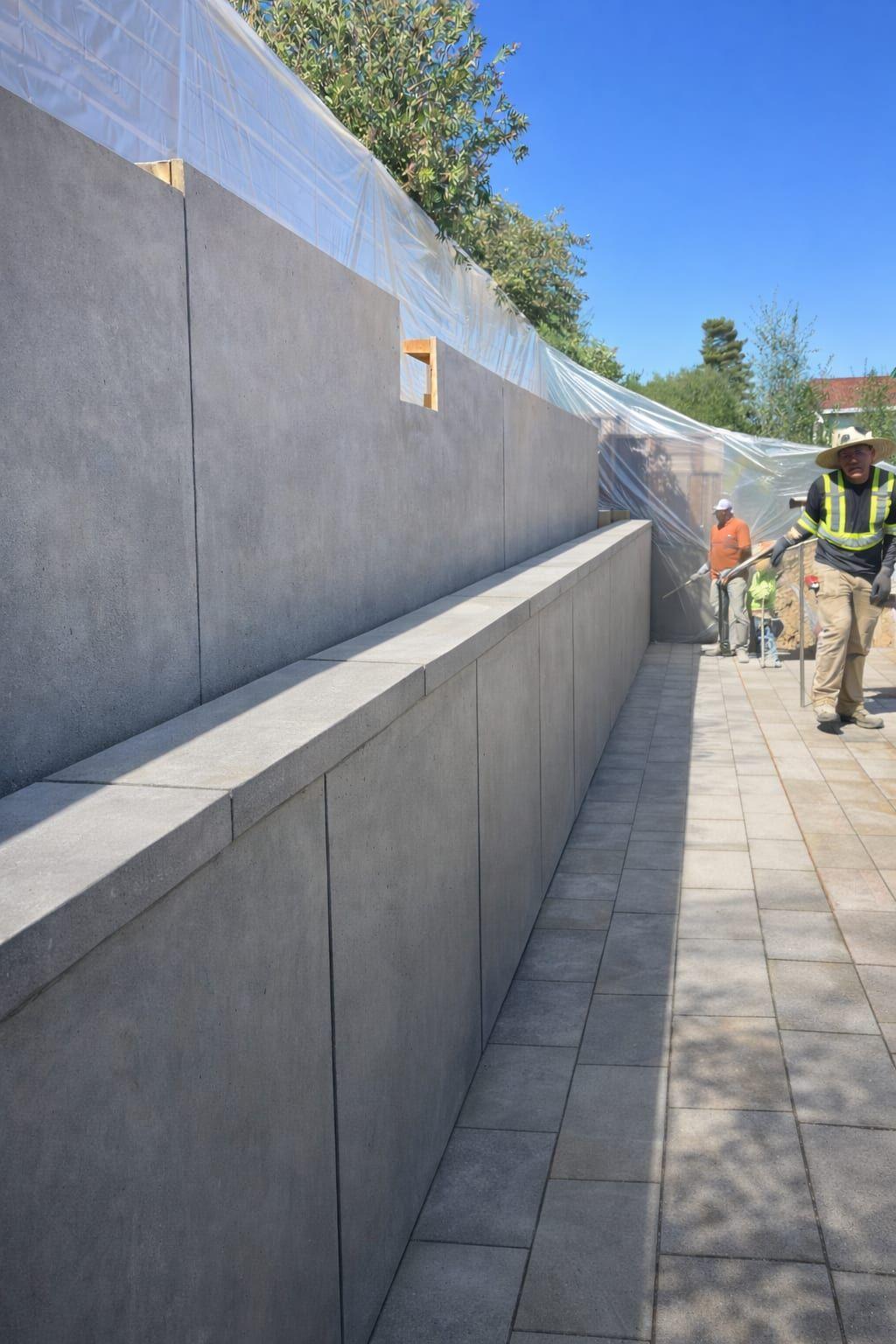
Multi-level decks on hillside lots solve a practical problem while creating architectural interest. The design logic: each deck level follows a natural contour break, with transitions between levels sized to the actual grade change. Level changes of 7–24 inches connect with a single step. Larger changes need a full stair run with code-compliant geometry: 7¾-inch maximum rise, 10-inch minimum run under California Residential Code, with a minimum 36-inch clear width. On Noe Valley and Bernal Heights lots where grade drops 6–10 feet over a 30-foot horizontal run, three deck levels connected by two stair runs is a common configuration. Retaining walls are often paired with hillside decks to stabilize grade transitions between levels — they're a structural partner to the deck, not a separate project.
Stair Systems: Open vs. Enclosed Risers
Open stair systems — traditional stringer-and-tread construction without risers — are standard on hillside decks but have specific code implications in WUI zones. Open risers allow ember accumulation beneath the tread, which is a fire ignition hazard under the California Fire Code. In high-risk WUI zones, CBC Section R327 requires either enclosed risers or ember-resistant mesh screening behind open risers. Composite stair treads (TimberTech AZEK or Trex Transcend, matching the deck surface) are preferable to pressure-treated wood on exposed hillside stairs — they hold up to direct rainfall and fog-belt moisture without the maintenance cycle that PT lumber requires. For a full comparison of composite materials' moisture performance, see our composite vs. wood decking guide.
Railing Requirements and Code
Any deck surface more than 30 inches above grade requires a guardrail. On a hillside deck where some edges are 15+ feet above downhill grade, the railing is a critical safety element. California minimum railing height is 42 inches for decks more than 30 inches above grade. The 4-inch sphere rule applies per CBC Section R312: no opening in the railing assembly larger than 4 inches — this governs both baluster spacing and the gap between the bottom rail and the deck surface.
On elevated hillside decks with strong Bay Area views — the whole reason to build the deck — railing design becomes a significant design decision. Cable railing systems preserve sightlines but cost more than aluminum balusters:
| Railing Type | Installed Cost (per linear ft) | Best For |
|---|---|---|
| Aluminum balusters | $80–$130 | Budget-conscious; any zone |
| Cable railing (stainless) | $150–$250 | View preservation; most slopes |
| Glass panel system | $200–$350 | Sausalito / Tiburon waterfront; max views |
Both cable and glass systems comply with code when properly engineered. Glass panel systems are common on Sausalito waterfront deck projects where maximizing bay views is the primary design driver.
Material Continuity Between Levels
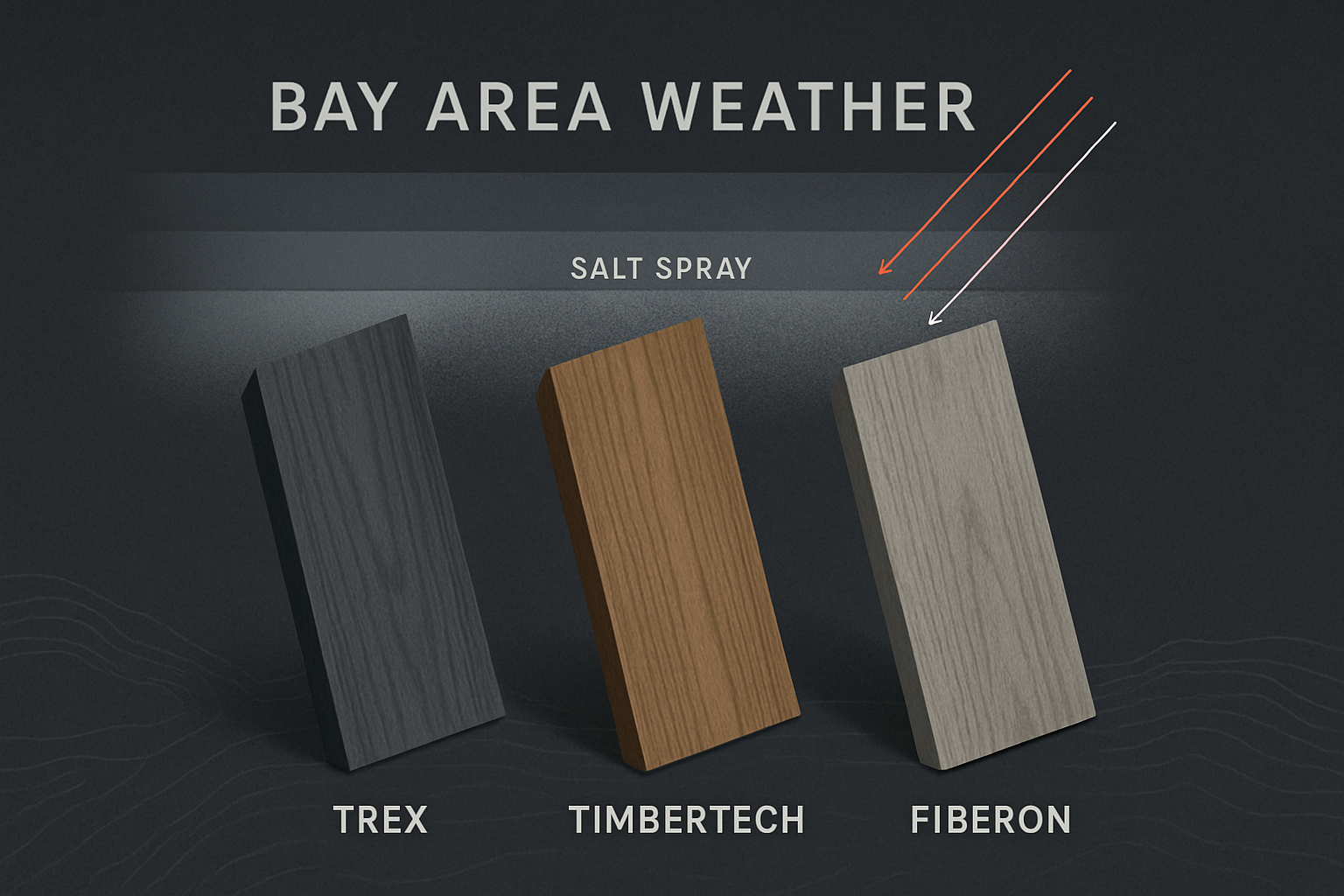
On a multi-level deck, material consistency matters more than on a single-level build — because all levels are typically visible simultaneously from inside the house and from downhill sightlines. Matching decking material, railing style, and trim details across all levels creates visual unity. Deliberate contrast — one level in TimberTech AZEK, another in an IPE-look composite — can also work architecturally, but it requires intentional design, not accidental specification. Fastener color, board direction, and fascia wrapping should be resolved at the design stage, not in the field. For a detailed material comparison, our Trex vs. TimberTech vs. Fiberon guide covers how each brand performs in the fog belt and coastal exposure zones where most hillside decks in SF and Marin sit.
Real Hillside Deck Project Examples: What They Actually Cost
Numbers are more useful when they're attached to actual projects. Here are three recent Gadget Construction hillside deck projects with line-item breakdowns.
Project 1: Twin Peaks, San Francisco — Steep-Slope Composite Deck
600 sq ft Trex Transcend deck on a 40-degree slope. 14-foot posts at the downhill elevation, drilled caissons to 18 feet. Helicopter delivery required for framing lumber — site accessible only by interior staircase. WUI-compliant ember-resistant detailing throughout. SF DBI permit with full plan review.
| Line Item | Cost |
|---|---|
| Structural engineering and stamp | $4,200 |
| Caisson drilling and concrete (8 piers) | $13,600 |
| Framing lumber and hardware | $8,400 |
| Helicopter material delivery (half-day) | $3,800 |
| Trex Transcend decking and installation | $16,200 |
| Cable railing system (65 linear ft) | $9,800 |
| Stair system (one run, 14 treads) | $4,100 |
| WUI ember-resistant detailing | $1,600 |
| SF DBI permit and inspections | $4,400 |
| Site drainage and grading | $2,200 |
| Total | $68,300 |
The helicopter delivery added $3,800 to a project that would have cost $1,200 in standard material staging on a flat lot. That $2,600 delta is real, and it didn't appear in the initial budget before the site assessment confirmed the access constraint. Total project timeline: 6 months including 3 months of SF DBI plan review.
Project 2: Tamalpais Valley, Mill Valley — Multi-Level Canyon Deck
800 sq ft across three deck levels on a Tamalpais Valley canyon lot. Mill Valley canyon deck construction on a 30-degree slope with persistent fog-belt moisture — TimberTech AZEK specified for its 50-year fade warranty and capped composite construction. Marin CDA permit. Two full stair runs connecting three levels with continuous cable railing.
| Line Item | Cost |
|---|---|
| Structural engineering and stamp | $5,600 |
| Caisson drilling and concrete (10 piers) | $17,200 |
| Framing, posts, and hardware | $11,400 |
| TimberTech AZEK decking — 3 levels | $21,800 |
| Two stair runs with composite treads | $7,200 |
| Aluminum railing with cable infill | $8,400 |
| Engineered drainage system | $3,100 |
| Marin CDA permit and inspections | $3,400 |
| Total | $78,100 |
Capped composite decking, such as TimberTech AZEK, is a polymer composite board with a sealed polypropylene or PVC outer cap that resists fade, stain, and moisture penetration — the right specification for a canyon-facing deck that's in the fog belt 200+ days per year.
Project 3: Sausalito — Elevated Waterfront Deck with Pergola
500 sq ft elevated deck over a 22-foot grade change at a Sausalito waterfront property. Stainless steel post bases and connectors specified throughout for salt-air exposure. Integrated pergola above the main deck level. Sausalito Building Division permit.
| Line Item | Cost |
|---|---|
| Structural engineering and stamp | $3,800 |
| Caisson drilling and concrete (6 piers) | $10,200 |
| Framing, posts, and stainless hardware | $9,600 |
| TimberTech AZEK decking and installation | $13,400 |
| Glass panel railing system (55 linear ft) | $14,300 |
| Integrated pergola structure | $5,800 |
| Stair run with stainless cable | $3,100 |
| Sausalito Building Division permit | $2,900 |
| Total | $63,100 |
Gadget Construction has completed elevated deck construction across the SF Sunset, Noe Valley, Twin Peaks, Sausalito, and Mill Valley fog corridor — the full range of hillside conditions that drive the cost scenarios above. The project gallery includes photos from multi-level and elevated builds across all three slope categories.
What to Expect in Elevated Deck Cost: Ranges by Slope Category
Hillside deck cost premiums follow slope severity — and multi-level design adds another layer on top. These ranges come from 500+ Bay Area composite deck projects, not national averages.
A hillside deck at a 35+ degree slope costs 50–80% more than a comparable flat-lot deck. Here's how the tiers break down:
| Slope Category | Degree Range | Post Heights | Premium Over Flat-Lot | Typical 400 sq ft Deck |
|---|---|---|---|---|
| Mild slope | 10–20° | 4–8 ft | +15–25% | $25,000–$40,000 |
| Moderate slope | 20–35° | 8–14 ft | +30–45% | $30,000–$46,000 |
| Steep slope | 35°+ | 14–20+ ft | +50–80% | $38,000–$58,000+ |
| Multi-level (any slope) | Any | Varies | Add 15–25% to slope tier | Varies |
Multi-level adds cost in every category: more structural connections, more stair systems, more railing linear footage, and more engineering coordination between levels. A three-level deck on a steep Bernal Heights or Marin hillside lot at 800 sq ft total can reach $80,000–$100,000 when engineering, caissons, access logistics, and railing are fully scoped. That's not unusual. It's what the structural problem actually costs to solve correctly.
For context on how these hillside premiums compare to standard elevated deck cost in the Bay Area, our composite deck cost breakdown covers the flat-lot baseline in detail. The retaining wall work that often accompanies deck construction on slope adds $8,000–$25,000+ depending on wall height and length — budget for it as a related scope from the start if your site has significant grade transitions.
Questions to Ask Your Hillside Deck Contractor
Most of the ways a hillside deck estimate goes wrong are detectable before you sign — if you ask the right questions. Here's what every homeowner on a sloped lot should be asking.
Who is your structural engineer, and what does the stamp fee include? The engineer's name, license number, and a clear scope of what's covered in the fee should be immediate answers. Vagueness here means either the engineer hasn't been engaged yet or the cost is buried somewhere you can't see it.
Are you drilling caissons or pouring surface footings? On any slope above 20 degrees, the answer should be caissons. Surface footings on steep hillside lots are inadequate for seismic and lateral load requirements under California Residential Code. If the answer is surface footings on a steep site, push back.
How will you handle material delivery, and is there a site-access line item? A contractor who hasn't assessed site access on a hillside lot hasn't done the pre-bid work. The answer should include a specific plan: concrete pump, hand-carry staging, or — on steep inaccessible lots — whether a helicopter lift has been priced. Vague answers here are where change orders are born.
What is your allowance for site access costs, and is it in the written bid? "We'll figure it out" is not an answer. The number should appear on the estimate before you sign — named and explicit, not absorbed into a general labor line.
Can you show me two or three comparable hillside deck projects you've completed? Photos, addresses, scope descriptions. A contractor who hasn't built on steep Bay Area lots is learning on your project.
How long will permits take in my jurisdiction, and have you factored that into the schedule? SF DBI and Marin CDA plan review runs 2–4 months for structural residential work. Any contractor quoting a 6-week start date on a hillside deck with required engineering review hasn't done the schedule math.
Is your price fixed, or does it include site-access and discovery allowances? A legitimate hillside deck bid includes named allowances for access costs and identifies what conditions would trigger additional scope. A fixed price with no named allowances on a hillside project means one of two things: the contractor knows the site thoroughly, or the surprises are coming as change orders.
Frequently Asked Questions
How much does hillside deck construction cost in San Francisco or Marin?
Hillside deck construction in SF and Marin typically costs $32,000–$75,000+ for a 400–600 sq ft deck, depending on slope severity, post heights, caisson requirements, and site access. That's a 30–60% premium over a comparable flat-lot deck. Steep-slope lots above 35 degrees — common in Twin Peaks, Bernal Heights, and Marin canyon neighborhoods — push costs to $50,000–$80,000+ once engineering, permits, and access logistics are fully scoped.
Do I need a structural engineer for a hillside or multi-level deck?
Yes — a structural engineer's stamp is required, not optional, for any multi-level or elevated deck on a hillside in San Francisco or Marin. The engineer determines caisson depth, post sizing, lateral bracing, and seismic connection hardware. The stamp fee runs $2,000–$6,000 and must appear as a line item on any legitimate hillside deck bid. Any contractor skipping this step on a steep-slope project is building out of compliance.
What are caissons, and why do hillside decks need them instead of regular footings?
Caissons are machine-drilled concrete piers that extend 10–25 feet down to bedrock or load-bearing soil, bypassing the unstable fill and decomposed rock common on Bay Area hillside lots. Unlike standard 24-inch surface footings, caissons can handle the lateral loads created by tall posts on steep slopes and meet seismic requirements for Seismic Design Category D. Each caisson costs $800–$2,000 installed; most hillside decks require 6–12 of them.
What WUI fire zone rules apply to deck materials in Marin and the Oakland Hills?
California Building Code Section R327 governs WUI (wildland-urban interface) deck construction in Marin, the Oakland Hills, Berkeley Hills, and parts of Twin Peaks and Bernal Heights. In these zones, decking must meet Class A or Class B fire-resistance ratings — composite decking brands like Trex Transcend and TimberTech AZEK qualify. Ember-resistant screening is required under deck boards, and open stair risers may need mesh backing. Your lot's fire zone designation is attached to the parcel, not the neighborhood — verify it before selecting materials.
How long does a hillside deck project take from start to finish in SF or Marin?
Total project timeline for a hillside deck in San Francisco or Marin is typically 5–8 months. SF DBI and Marin CDA plan review alone runs 2–4 months for structural residential projects. Construction typically takes 6–12 weeks depending on scope and site access. Steeper sites with caisson work and limited equipment access add time to the construction phase. Do not let a contractor sell you a 6-week start date on a project that requires full plan review.
Is helicopter material delivery actually common on SF and Marin hillside deck projects?
On the steepest lots — certain properties in Sausalito, Tiburon, Tamalpais Valley in Mill Valley, and Twin Peaks in SF — helicopter delivery is a real and necessary line item, not a hypothetical. A half-day lift to get framing lumber and hardware to an inaccessible hillside site runs $2,500–$6,000. Gadget Construction priced and used helicopter delivery on a recent Twin Peaks project where the only access was an interior staircase. Any bid on a steep inaccessible lot that doesn't address this is incomplete.
Can I build a deck on a slope in a WUI fire zone with wood framing?
Standard pressure-treated lumber framing may not comply with California Building Code Section R327 requirements in high fire hazard severity zones without additional treatment or assembly modifications. In some high-hazard WUI zones, non-combustible steel framing is required for structural members. Composite decking is the standard surface material choice in WUI zones because it meets Class A fire-resistance ratings. Confirm your lot's specific classification — requirements vary by fire hazard severity zone tier (Moderate, High, or Very High).
Ready to Get a Real Number for Your Hillside Deck?
Planning a hillside deck in Twin Peaks, Bernal Heights, Noe Valley, Mill Valley, Sausalito, Tiburon, the Oakland Hills, or the Berkeley Hills? The only way to get an accurate estimate is a site walk with someone who understands the structural problem — not a square-footage calculator. Gadget Construction (CA License #1132983) brings a structural engineer to complex hillside assessments, evaluates access constraints before bidding, and provides fixed-price estimates with named allowances for site access and discovery — not mystery change orders after the caissons are poured. We've completed 500+ projects across 31 cities and 6 Bay Area counties, with a 5-year workmanship warranty in writing on every job. Schedule your site assessment through our contact page.